
What’s the difference? What’s it all about?
Halloween is of course really Hallow e’en, or “the eve of all hallows”. At the moment, the shops are full of black and orange Halloween items, ranging from spiders to ghosts to skeletons and pumpkins (an American addition) … It seems that as in the case of other festivals, commercial interests have taken over.
However, all these festival days have Christian origins, and while historical pre-Christian ceremonies and traditions play their part, this is the time of year when we remember: not just the Saints, but our friends and family members, and those who have died in wars and conflicts.
For a more complete look at this, check this link for an article by a historian, and the Church of England website
31 October All Hallows Eve
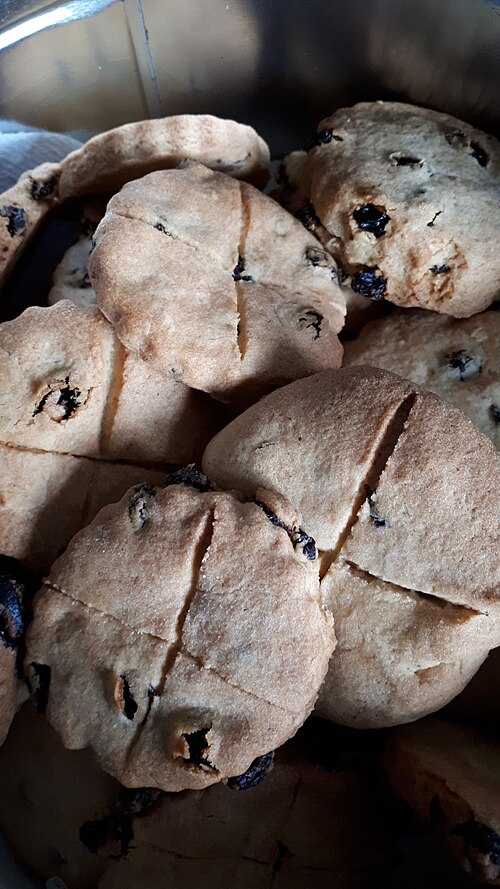
The eve of the day of All Saints (hallowed means sainted). The church ceremonies started that evening, but it was also traditionally the occasion for some fun and for giving alms.
The picture shows traditional “soul cakes”, shared on that evening. You can find a recipe at this link.
1 November All Saints’ Day
All Saints’ Day was originally a commemoration of martyrs, people who died for their faith, but was later expanded to include all saints, as the name suggests. Originally a spring festival, in the 8th century, Pope Gregory III moved All Saints’ Day to 1 November to mark the papal dedication of a chapel honouring all saints in St Peter’s Basilica, Rome.
Here at Christ Church, as this year All Saints’ Day falls on a Sunday, we will recognise the festival in different prayers throughout the Sunday morning liturgy.

2 November All Souls Day
This is a more recent addition to the church calendar; it was added in the 11th century and for the Roman Catholic church, was particularly concerned with souls in purgatory. The Protestant church did not accept the idea of purgatory so it is not celebrated by them, but since 1928, has been celebrated by the Anglican church, commemorating all the dead rather than souls in purgatory.

Still on the theme of Remembrance, is Remembrance Sunday, when we remember those who were injured who died in war. Most of Europe celebrates this on 11 November, but in UK we remember on the nearest Sunday. This year that falls on 8 November.
All Saints’ Day around other countries
In the Philippines, families repair gravestones, and share food and prayers.
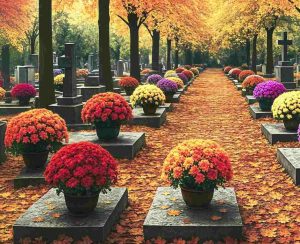
In France, as we know, graves are decorated with chrysanthemums, as people take time to remember their loved ones. It’s an important national holiday, as people return to their home towns especially to visit the graves.
In Mexico, the Day of the Dead is a family party, with picnics in the graveyards, flowers and parades.